-

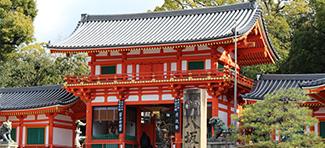
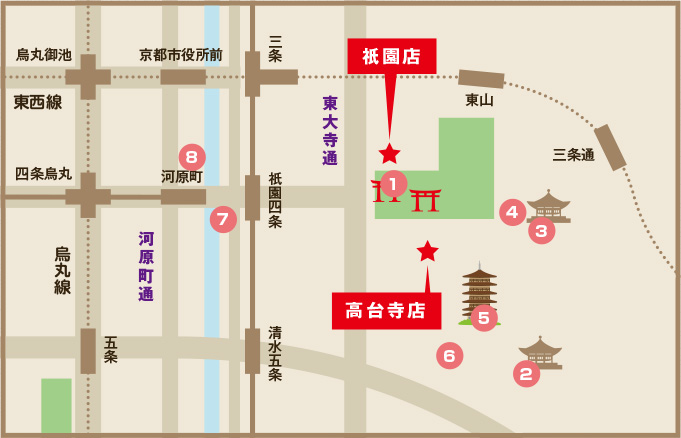
Yasaka Shrine is the grand head shrine of all the Yasaka Shrines of Japan and all the related shrines (about 2,300 shrines) which have Susanoo-no-Mikoto as the deity, and is call Gion-san by the local people.
It is one of the most popular tourist attraction in Kyoto, helped by the fact it is located next to Maruyama Park which is famous for its weeping cherry trees.
Also the famous Gion Festival is the festival of Yasaka Shrine, which dates back to Heian Period’s “Gion Goryo-e” which was a spiritual event in which people prayed for the removal of any disease or disaster.
-

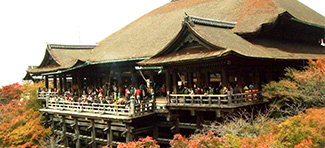
The stage of Kiyomizu Temple is an important cultural assets of Japan and has been designated as a national treasure.
The place seen in many photos is the main hall named "Stage of Kiyomizu". Because of its height the phrase "jump from the stage of Kiyomizu" meaning “a daring feat” was born. Today the superb view overlooking the rooftops of Kyoto attracts many people.
-

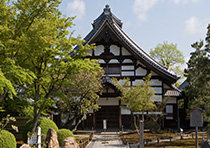
Kodai-ji Temple was built by Hideyoshi Toyotomi’s wife Nene to mourn the Bodhi of him. Not only is it beautiful as a temple, the beauty of its garden is also second to none.
It is also famous for its weeping cherry trees in the spring and the foliage in the autumn.
-

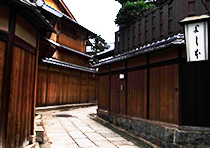
Ishibei-koji is located south of Yasaka Shrine on the way to Kodai-ji Temple.
People who walk here are mostly local people or tourists, and the modern atmosphere is very popular.
-

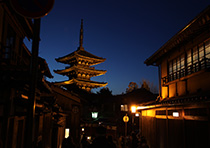
This tower which stands in the middle of Higashiyama is said to be the oldest five-storied pagoda of Kyoto.
This well-loved land mark of Higashiyama, towering over the surrounding houses and shops called “Tower of Yasaka” has a height of 46m and is essential to the view of Higashiyama.
-

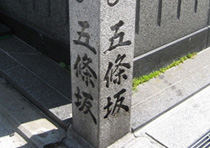
Gojo-Zaka and Chawan-Zaka are where the Kiyomizu were originated, located in Higashiyama.
Even now many potters and pottery shop gather, earning the name “Town of pottery”.
The assortment of the shops is diverse, ranging from bowls for everyday use to one-of-a-kind items, all great for souvenirs from Kyoto.
-

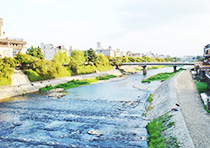
Kamogawa is a river about 33km long flowing north to south through Kyoto city up to the confluence with Katsura River. Its source is in the vicinity of Mount Sajikigatake.
This river has nurtured this city of a thousand years and the Kyoto culture in the long history of Kyoto. Even now it keeps its clear stream and is loved by many as a place of relaxation.
-

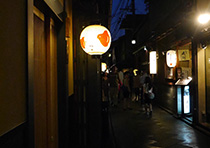
The red-light district that lies between the Kamogawa River and Kiyamachi Street is Ponto-cho. In the narrow streets made of cobblestone, there are red-light district specific businesses and general stores.
The shops on the east side face Kamogawa River and many have breeze-enjoying floors. All very enjoyable places to visit.